Amna Nawaz:
Monica de Bolle is a Latin American expert at the Peterson Institute for International Economics.
The cost of the crisis in the years ahead, she says, could amount to tens of billions in international aid. Since 2014, most Venezuelan migrants have fled to Colombia and Peru. But over the last few years, they have been fanning out across all of South America.
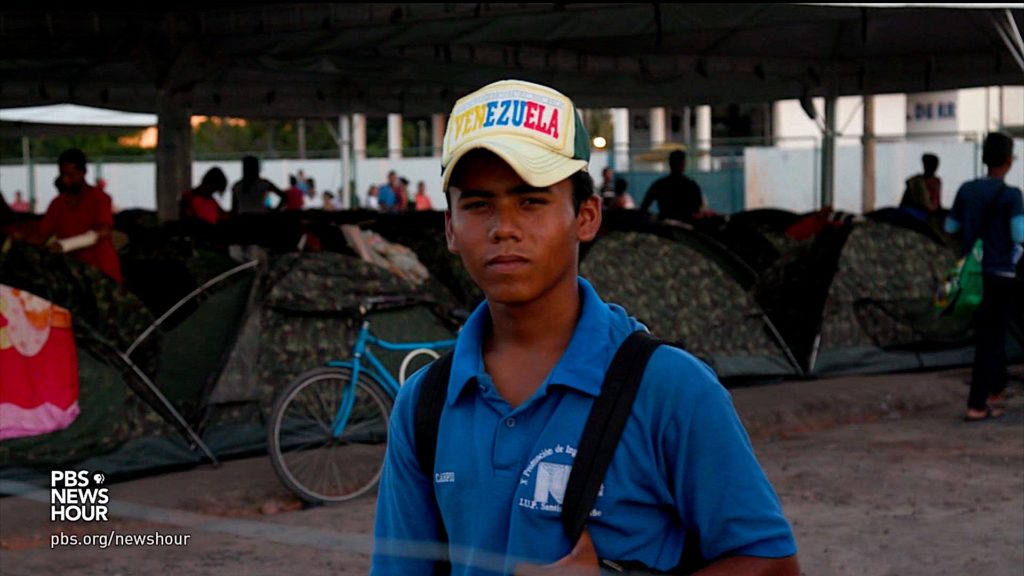
Earlier this year, tensions flared along Brazil's border with Venezuela after it was shuttered for nearly three months by President Maduro, in an attempt to block aid from reaching Venezuela. Today, more than 100,000 Venezuelans are now estimated to have settled in Brazil, as part of the largest migration between the two nations in history.
Up ahead, where you see those two flags, that's the actual international boundary between Venezuela and Brazil. And officials say they see upwards of 500 or 550 people crossing every day now, entire families, some with tiny babies, newborn babies, in fact. Some folks, they say, have even been walking as many as eight days before they get here.
But Brazil's government, led by far-right president Jair Bolsonaro, has so far kept its border open to Venezuelan migrants. The president's son, Congressman Eduardo Bolsonaro, often serves as a foreign envoy for his father, who is now considering nominating him to be Brazil's next ambassador to the United States.
We spoke in Brazil's capital of Brasilia.
Can you commit right now that Brazil is going to continue to welcome in Venezuelan refugees as long as they're fleeing?
ncG1vNJzZmivp6x7sa7SZ6arn1%2Bjsri%2Fx6isq2ejnby4e8WoqWaulaOyu8HEpZinq12buaaxyKeeZpuYlry0ecCtZKGnnZp6o77As6ClZZ%2Bbs6a%2B0marnqWgpL%2BivthmqZ6epZyybq3NnWSuppOav7WtyKersg%3D%3D